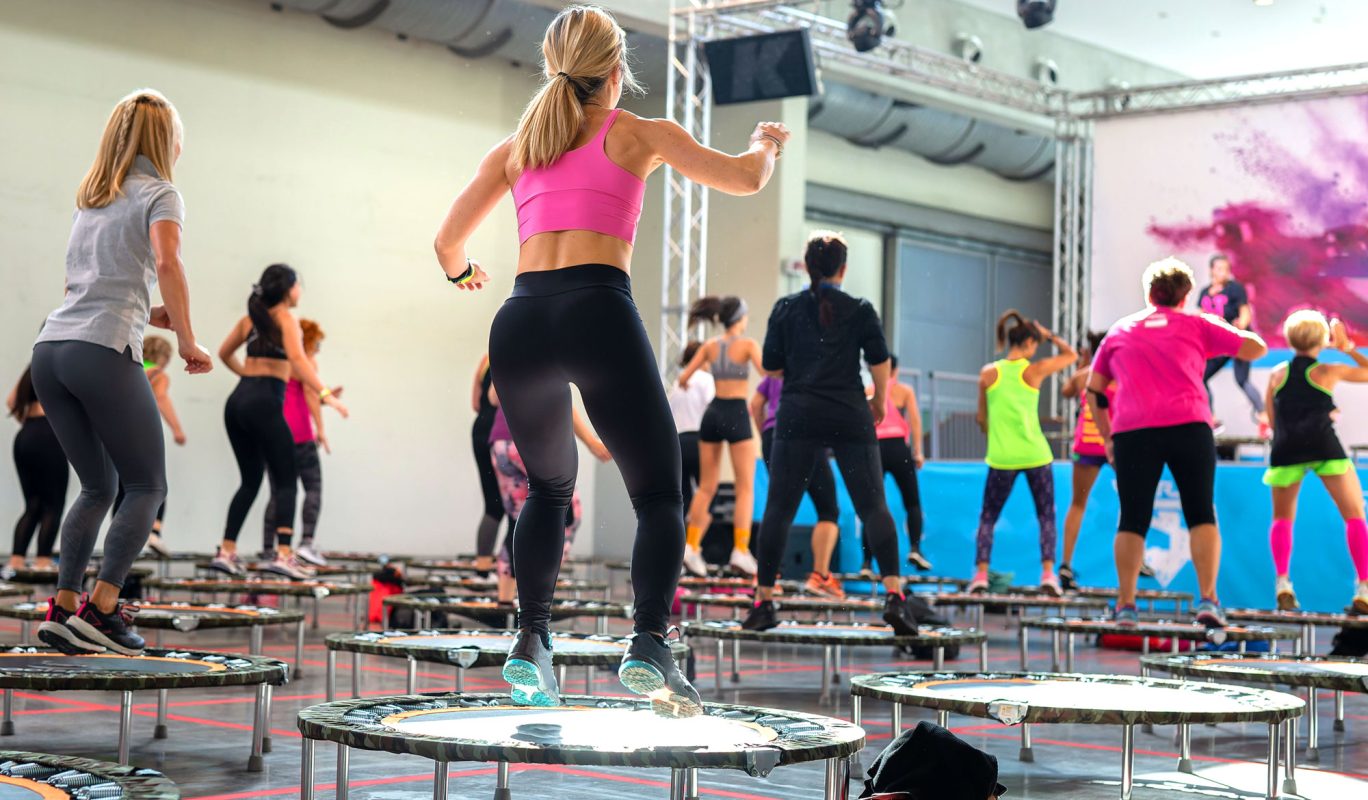
The conventional assumption about exercise is straightforward: more impact equals more intensity. Running beats walking. Jumping beats jogging. This logic holds in some contexts, but it misses a growing body of evidence suggesting that impact and output are far more separable than most people realise. Bounce cardio, the format at the heart of every trampoline class singapore session, challenges this assumption directly. It delivers cardiovascular output comparable to running while reducing joint impact by a significant margin, and the physiological mechanisms behind this are well worth understanding.
Defining Low-Impact in a Training Context
Low-impact does not mean low-effort or low-result. In exercise science, impact refers specifically to the ground reaction forces experienced by joints during a movement. High-impact activities like running, jumping rope, and plyometrics generate ground reaction forces of two to three times bodyweight or more at each contact.
Low-impact activities keep at least one foot in contact with a surface at all times, or in the case of trampolining, distribute the landing force across the mat’s elastic surface rather than transmitting it directly through the skeletal system.
This distinction matters enormously for:
- Individuals with arthritis, bone stress injuries, or joint hypermobility
- Postpartum women returning to exercise
- Older adults prioritising joint longevity
- Athletes managing cumulative impact load during high training volume periods
How the Trampoline Mat Redistributes Force
When you land on a trampoline mat, the elastic surface bends downward and absorbs a large portion of your kinetic energy before gradually returning it as you rise. This energy transfer extends the duration of your landing phase, which is the physiological equivalent of a very efficient shock absorber.
By extending the time over which the landing force is distributed, the trampoline reduces the peak force experienced by your knees, hips, and spine at any single moment. Studies comparing trampoline exercise to treadmill running have found reductions in peak joint loading of up to 80% during trampoline activity, while heart rate responses remain comparable between the two modalities at similar effort levels.
This means your cardiovascular system is working just as hard, but your joints are experiencing a fraction of the cumulative stress.
Cardiovascular Response During Bounce Cardio
Heart rate during a structured trampoline class singapore session rises quickly and remains elevated throughout, particularly during sequences that combine arm movements, directional changes, and tempo variations. This sustained elevation is the key driver of cardiovascular adaptation.
The cardiovascular benefits that accumulate from regular bounce cardio sessions include:
- Increased stroke volume, meaning the heart pumps more blood per beat
- Improved cardiac efficiency and reduced resting heart rate over time
- Enhanced oxygen extraction at the muscle level through capillary development
- Better regulation of blood pressure through improved vascular elasticity
These adaptations are functionally identical to those produced by running or cycling at comparable intensities, with the critical difference being the joint cost at which they are achieved.
VO2 Max and Caloric Expenditure in Bounce Training
VO2 max, the maximum rate at which your body can consume oxygen during exercise, is one of the strongest predictors of long-term cardiovascular health and longevity. Improving it requires sustained effort at moderate to high intensity over time.
Research comparing caloric expenditure and cardiovascular demand between trampoline exercise and treadmill running has found that trampoline workouts produce oxygen consumption rates and caloric burn figures very close to running at a moderate pace. Some studies place the caloric output of a vigorous trampoline session between 400 and 600 calories per hour, depending on body weight and intensity.
The practical advantage is that many participants can sustain trampoline sessions for longer durations without the fatigue or discomfort that limits their running sessions, leading to greater total cardiovascular work per week.
Muscle Activation as a Driver of Caloric Output
Cardio output is not determined by footstrike rate alone. The total number of muscles engaged during an activity plays a significant role in oxygen consumption and caloric demand. Bounce cardio activates the full body continuously, including the core, upper back, shoulders, and arms in addition to the lower body.
This whole-body recruitment elevates the metabolic cost of the session above what lower-body-dominant cardio achieves at the same heart rate. It also means the post-exercise oxygen consumption, commonly called the afterburn effect, remains elevated for longer after a trampoline session compared to steady-state low-impact alternatives like swimming or cycling at an easy pace.
Why Bounce Cardio Works for Long-Term Consistency
Adherence is the single greatest predictor of fitness outcomes. The best training programme is the one a person will actually sustain for months and years. Bounce cardio has a structural advantage here because the format is inherently enjoyable, varied, and socially engaging in a group class setting.
Research in exercise adherence consistently shows that enjoyment of the activity is a stronger predictor of long-term participation than belief in its effectiveness. Many individuals who struggle to maintain running or traditional gym programmes find bounce cardio easy to commit to because it does not feel like punishment.
For Singapore’s working population, where time is limited and motivation after long workdays can be low, choosing a format that delivers high cardiovascular output in a short, engaging session is not a compromise. It is a strategic fitness decision.
TFX Singapore has built its bounce programming around this principle, creating sessions that maximise cardiovascular output within a format that members genuinely look forward to attending.
FAQs
Q: Can bounce cardio replace running entirely for someone training for a 5K or 10K race? A: It can supplement running effectively and is useful for recovery days or high-volume training weeks where joint stress needs to be managed. However, for race-specific preparation, some road running is necessary to develop the specific biomechanics and pacing awareness required for race conditions.
Q: Is bounce cardio effective for individuals with osteoporosis? A: This requires medical guidance. While the reduced impact makes it safer than high-impact running for many people, individuals with moderate to severe osteoporosis should have their bounce training supervised and cleared by a physician, as falls from trampolines carry their own risk profile.
Q: How quickly does cardiovascular fitness improve with twice-weekly bounce cardio? A: Noticeable improvements in exercise tolerance, resting heart rate, and breathlessness during daily activity typically emerge within four to six weeks of consistent twice-weekly sessions. Measurable VO2 max improvements are usually detectable within eight to twelve weeks.
Q: Does music tempo during a bounce class affect cardiovascular output? A: Yes, meaningfully. Research in exercise music shows that tempo-matched music increases effort output and extends time to fatigue. Instructors who curate music to match session intensity phases are effectively using a proven tool to boost cardiovascular demand without requiring participants to consciously work harder.