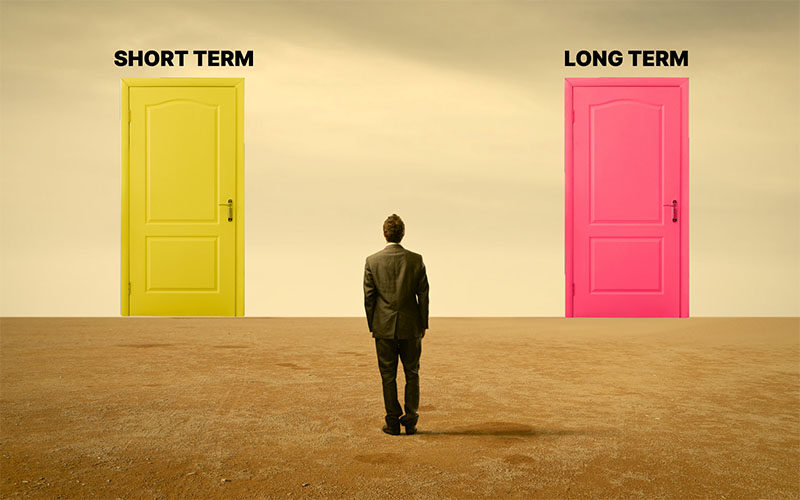
When it comes to building wealth and achieving financial goals, investors face a critical decision: should they focus on short-term or long-term investments? Both strategies have distinct advantages, risks, and purposes, and the right choice depends on your financial objectives, time horizon, and risk tolerance. Understanding the differences between short-term and long-term investment strategies can help you allocate your capital effectively and make informed decisions that align with your goals.
Understanding the Core Difference
Short-term and long-term investments are primarily distinguished by the duration you plan to hold the asset and your intended financial outcome.
- Short-term investments are typically held for less than three years. They prioritize liquidity, capital preservation, and quick returns.
- Long-term investments are held for several years or even decades. They focus on compounding, growth, and value appreciation over time.
Both play important roles in a diversified portfolio. While short-term strategies provide flexibility and immediate access to funds, long-term strategies help investors accumulate substantial wealth through sustained growth and reinvestment.
What is a Short-Term Investment?
Short-term investments are assets designed to provide returns or liquidity within a brief time horizon. They’re often used to achieve near-term financial goals like buying a car, paying for education, or maintaining an emergency fund.
Characteristics of Short-Term Investments
- High liquidity: Funds can be easily accessed when needed.
- Lower risk: Many short-term investments prioritize capital safety.
- Limited growth potential: The short duration restricts the impact of compounding.
- Predictable returns: Investments such as certificates of deposit (CDs) or treasury bills often offer fixed interest.
Common Types of Short-Term Investments
- Money Market Accounts: Offer modest returns and easy access to funds.
- Certificates of Deposit (CDs): Provide fixed interest over a set period, often insured by the FDIC.
- Short-Term Bonds: Government or corporate bonds with maturities under three years.
- Treasury Bills (T-Bills): Low-risk securities issued by the U.S. government.
- High-Yield Savings Accounts: Allow flexibility while offering slightly higher returns than traditional savings.
- Exchange-Traded Funds (ETFs): Short-term bond or cash-equivalent ETFs can provide liquidity and modest income.
Short-term investments are ideal for preserving capital and earning modest returns while keeping funds accessible for upcoming needs.
What is a Long-Term Investment?
Long-term investments involve holding assets for extended periods, typically five years or longer. This strategy leverages time to compound returns, endure short-term volatility, and maximize growth potential.
Characteristics of Long-Term Investments
- Higher growth potential: The compounding effect can substantially increase wealth.
- Greater risk tolerance: Long-term investors can withstand market fluctuations.
- Tax efficiency: Capital gains taxes are lower for long-term holdings compared to short-term trades.
- Income generation: Long-term assets like dividend-paying stocks or real estate can provide passive income.
Common Types of Long-Term Investments
- Stocks and Equity Funds: Historically provide the highest returns over long periods.
- Retirement Accounts (401(k), IRA): Encourage long-term investing through tax advantages.
- Real Estate: Property investments appreciate over time while generating rental income.
- Mutual Funds and Index Funds: Offer diversification and steady growth through compounding.
- Bonds with Long Maturities: Provide stable income and principal protection if held to maturity.
Long-term investments are foundational for goals such as retirement, wealth transfer, or funding future generations.
Comparing Short-Term vs. Long-Term Investments
1. Time Horizon
- Short-Term: Ideal for goals within 1–3 years, such as a vacation, tuition, or down payment.
- Long-Term: Suitable for objectives 5+ years away, including retirement or business expansion.
Your time horizon is one of the most decisive factors in determining which investment type suits you best.
2. Risk and Volatility
- Short-Term: Lower volatility due to conservative instruments like bonds or CDs, but limited upside.
- Long-Term: Exposed to market swings but has greater potential for higher returns as markets recover over time.
3. Returns
- Short-Term: Typically provides smaller, stable returns (1%–4% annually).
- Long-Term: Can generate higher returns (6%–10% annually or more) through compounding and reinvestment.
4. Liquidity
- Short-Term: High liquidity, allowing easy access to funds.
- Long-Term: Less liquid, as selling early may lead to losses or tax penalties.
5. Tax Implications
- Short-Term: Gains from assets held less than a year are taxed at higher ordinary income rates.
- Long-Term: Gains from assets held over a year are taxed at lower long-term capital gains rates.
6. Investment Goals
- Short-Term: Emergency fund, short-term purchase, or capital preservation.
- Long-Term: Retirement savings, wealth building, and estate planning.
How Inflation Affects Each Investment Strategy
Inflation plays a major role in determining real returns. Short-term investments often fail to outpace inflation, resulting in reduced purchasing power. Long-term investments, on the other hand, tend to outperform inflation through capital growth.
To mitigate inflation risks:
- Combine inflation-protected assets like Treasury Inflation-Protected Securities (TIPS) with equities.
- Include real assets such as real estate or commodities in long-term portfolios.
- Reassess allocations periodically to maintain inflation-adjusted returns.
Balancing Short-Term and Long-Term Investments
An effective portfolio often blends both short-term and long-term investments. This balanced approach provides liquidity for immediate needs while ensuring long-term growth.
The 3-Bucket Strategy
A practical framework for retirees and long-term investors is the 3-Bucket Strategy, which divides assets into:
- Bucket 1: Short-Term (0–3 years) – Cash, CDs, or money market funds for living expenses.
- Bucket 2: Medium-Term (3–10 years) – Bonds or balanced funds for stability and moderate growth.
- Bucket 3: Long-Term (10+ years) – Stocks, real estate, or mutual funds for growth and inflation protection.
This method ensures that you have immediate liquidity, intermediate stability, and long-term appreciation without needing to sell assets during market downturns.
Psychological Differences Between Short-Term and Long-Term Investing
The mindset behind each strategy differs significantly.
Short-Term Investing Psychology
Short-term investing often demands frequent monitoring and quick decision-making. Investors may experience stress due to daily price fluctuations, leading to emotional reactions like panic selling or overtrading.
Long-Term Investing Psychology
Long-term investing requires patience and discipline. Successful long-term investors understand that market downturns are temporary and focus on overall trends, not short-term volatility. A steady, disciplined approach usually results in better performance over decades.
Which Investment Strategy Is Right for You?
The decision between short-term and long-term investment depends on several personal factors.
Evaluate Your Goals
Ask yourself:
- When will I need this money?
- What level of risk am I comfortable with?
- Am I investing for income, stability, or growth?
Short-term investments are best if you expect to use the money soon or cannot tolerate volatility. Long-term investments suit those with future-oriented goals and the ability to handle temporary market dips.
Risk Tolerance
Your comfort level with risk plays a defining role. Conservative investors might prefer a larger portion of short-term assets, while aggressive investors might lean toward long-term equities for higher growth.
Financial Flexibility
Liquidity needs determine how much to allocate to short-term instruments. Keeping an emergency fund ensures that long-term investments can remain untouched during downturns.
Practical Steps to Build a Balanced Portfolio
1. Define Your Timeframes
Separate your financial goals into short-term and long-term categories, assigning appropriate investments to each.
2. Diversify Strategically
Diversify across asset classes—stocks, bonds, real estate, and cash—to reduce risk and stabilize returns.
3. Use Tax-Advantaged Accounts
Leverage retirement accounts like 401(k)s and IRAs for long-term growth while maintaining taxable accounts for short-term liquidity.
4. Rebalance Regularly
Market movements can distort your target allocation. Rebalancing restores your desired risk and reward ratio.
5. Avoid Emotional Decision-Making
Stick to your investment plan regardless of short-term market noise. Emotional reactions often lead to losses.
The Power of Compounding in Long-Term Investing
Compounding is the secret weapon of long-term investors. It allows earnings to generate additional earnings, creating exponential growth over time. Even small investments can grow substantially when reinvested consistently.
For example:
- Investing $10,000 at 8% annual return grows to nearly $46,000 in 20 years.
- Waiting just 10 years to start reduces the value to about $21,000 under the same conditions.
This demonstrates why starting early and staying invested is more powerful than timing the market.
Common Mistakes to Avoid
- Chasing short-term gains: Trying to time markets can result in buying high and selling low.
- Ignoring inflation: Keeping too much cash erodes real wealth.
- Lack of diversification: Overconcentration in one asset increases risk.
- Frequent trading: Excessive trading increases taxes and transaction costs.
- Neglecting rebalancing: Ignoring portfolio adjustments skews your risk exposure.
Being aware of these pitfalls helps investors maintain consistency and achieve sustainable growth.
Frequently Asked Questions (FAQ)
Is short-term investing profitable?
Yes, short-term investing can be profitable but usually yields lower returns compared to long-term investments. It works best for achieving near-term goals or preserving capital.
How long should I hold long-term investments?
Long-term investments are generally held for at least five to ten years or more. This period allows markets to recover from volatility and benefit from compounding.
Can I combine short-term and long-term investments?
Absolutely. Combining both provides flexibility, liquidity, and growth. A balanced portfolio ensures funds are available when needed while allowing long-term assets to compound.
What happens if I sell a long-term investment early?
Selling early may trigger capital gains taxes and reduce potential future growth. It can also lead to emotional decisions during market downturns.
How much of my portfolio should be short-term vs. long-term?
The ratio depends on your goals and risk tolerance. Generally, financial planners recommend keeping 10–30% of assets in short-term holdings and the rest in long-term growth vehicles.
Which is safer: short-term or long-term investing?
Short-term investing carries less market risk but higher inflation risk. Long-term investing faces short-term volatility but often produces stronger inflation-adjusted returns.
Choosing between short-term vs. long-term investment is not about picking one over the other but finding the right balance that aligns with your financial goals, time horizon, and comfort with risk. A thoughtful, diversified approach combining both strategies helps you preserve liquidity, generate steady income, and build lasting wealth for the future.